CSEM's Early Music Glossary

Early Music and historically-informed performance uses a vast variety of fascinating instruments which precede the modern ones we see in orchestras and chamber music programs today. You will see baroque violins, classical wind instruments, historical keyboards, and much much more when attending a CSEM program.

Here we have gathered terms, instruments, and techniques often used within historical performance and had our Society of musicians define each in their own words. Explore, and enjoy!

Stay tuned as we continue adding to and building this Glossary
Contributors to the Glossary include CSEM 2026 Intern Alexis Cai, as well as the musicians listed below.

Hear and see more in this video:

The Baroque violin with Susanna Ogata

What is your favorite thing about the Baroque Violin?
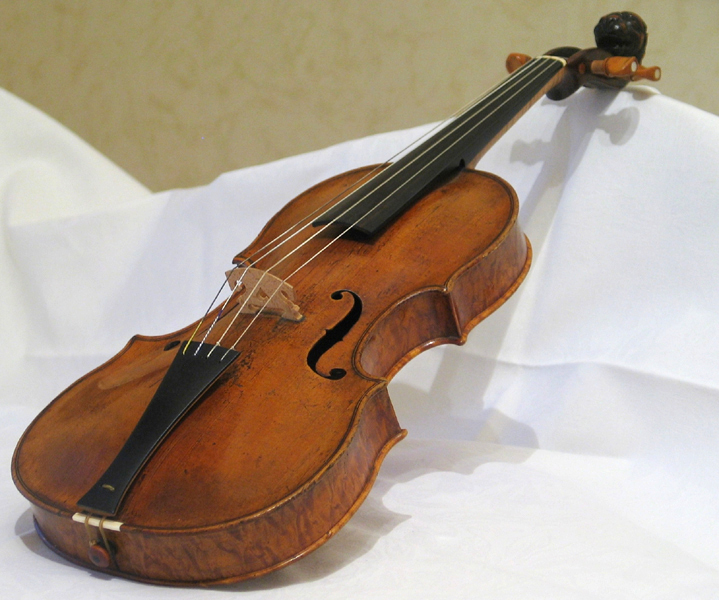
It’s exciting as a musician to play on the Baroque version of the violin and bow, set up as they would have originally been during that time. I feel as though I’m stepping into the shoes of Bach, Corelli, Vivaldi and their contemporaries by using the tools they would have used themselves when composing and playing their music. There is less tension on the strings of a Baroque violin than on a modern one, which allows the violin to have a more natural resonance. Baroque violins were also strung with gut, from cattle or sheep, instead of with metallic strings, and have a unique, warm sound. The Baroque bow is shaped differently from a modern bow with a heavier base, lighter tip, and outward curve in the middle of the stick. This bow lends itself to the articulations common during the day, whereas the modern bow is more suited to sustaining sound. Using these unique Baroque tools are inspiring, offering fresh perspective which helps drive my creativity with the music.

What is a piece that you would recommend someone unfamiliar with the Baroque violin listen to?
I’d recommend The Four Seasons by Antonio Vivaldi. The work is a violin masterpiece of the Baroque period and provides a full variety of colors and affect, valued features of Baroque music. The music also captures the giant imagination of Vivaldi who was a trendsetter in the Baroque period and influenced his peers. You get everything from technical virtuosity, double stops, fast lightening-fire passagework to literal representations of nature, bird calls, dogs barking, wind, storms, hunters, teeth chattering. There are many beautiful melodic moments which show the violin’s lyrical qualities reflecting the human voice.

In your opinion, what makes the Baroque violin particularly special?
The violin emerged as a solo and virtuosic instrument during the Baroque period. The music for violin that was being composed, especially solo pieces for the instrument, demanded more creativity and personal choices by the performer to make the music come alive. Not everything was notated during this time. Dynamics were sparingly written, articulation choice was mainly left up to the performer, and ornamentation was improvised in the moment. Though much of the repertoire was still collaborative, such as works for violin and continuo, many solo works for the instrument alone started to gain popularity amongst composers. As a violin player, there are many choices of repertoire during this period with as well as an emphasis on imagination and variety. As an artist, the Baroque violin and its music give me the creative space to find freedom and expression.

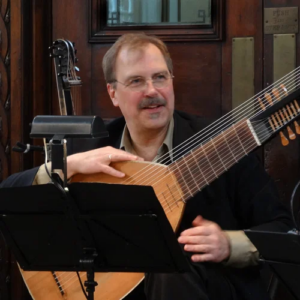
The Lute with Olav Chris Henriksen

Lutenist and former Secretary of CSEM

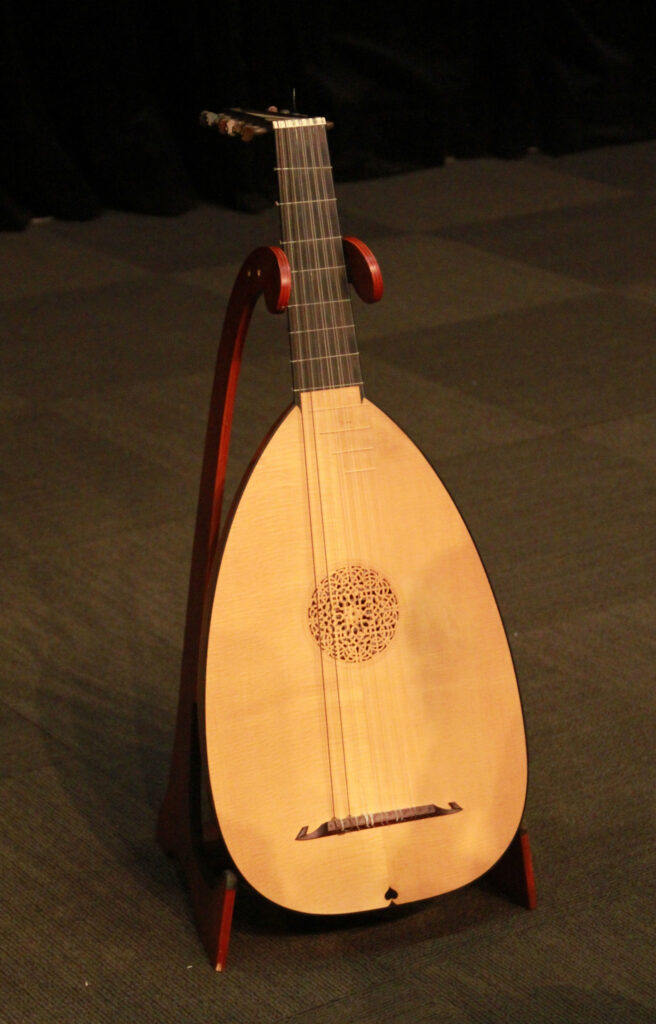
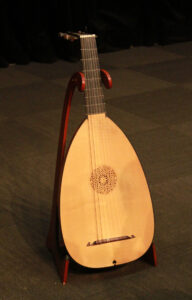
The lute originated in southwestern Asia, and by the eighth century AD was the most prominent instrument in Arabic culture. It was brought to Spain and Sicily by Muslim musicians in the ninth century, and spread further into western Europe. At that time the lute was an early form of the Arabic oud, and had a half-melon-shaped body with a wooden soundboard, a neck with a fretless fingerboard, and four courses (pairs) of strings which could be tuned with pegs in a bent-back pegbox. The instrument was played with a pick.

By the second half of the 15th century, string technology had advanced, expanding the lute’s range to three octaves upon 6 courses. It was now plucked with the fingers of the right hand, and frets were tied onto the fingerboard in order to prolong the sustain of the fretted strings. This was now an instrument practical for performing polyphonic music and accompaniments. By the 16th century, lute music had begun to be written down in tablature which was specific to the instrument. Baldesar Castiglione wrote in his book “The Courtier” (1528) that the lute had become the most favored instrument among courtiers.

Over the next 250 years, much of the finest instrumental music was written for it, including lute solos by Francesco da Milano, John Dowland, Denis Gaultier, and Silvius Leopold Weiss. During the late 16th and 17th centuries, players and luthiers experimented with adding more bass strings (up to 14 courses, 27 strings) and different ways of tuning the fretted strings, creating the baroque lute and long-necked theorbo. This made the lute a more demanding instrument to play, and as a result, many noblemen, including the French king Louis XIV and the English king Charles II, chose to study the five-course (nine strings) baroque guitar instead, leaving the lutes to be played by professional musicians.

Since the lute remained popular as a solo and ensemble instrument over several centuries, its notated repertoire went through the renaissance, baroque and classical styles. I personally have enjoyed studying and performing the music from all these periods. To me what is most special about the lute is the quality of its music, which is conveyed by the fingers of both of the player’s hands, in constant direct contact with the strings, the very source of its beautiful sound.

Hear and see more in this video of Peter:

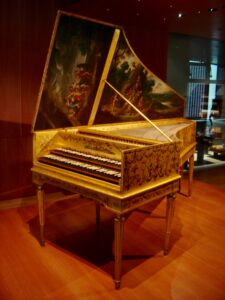
Harpsichord with Peter Sykes

What is something you would tell about the harpsichord to someone who had no knowledge of it?
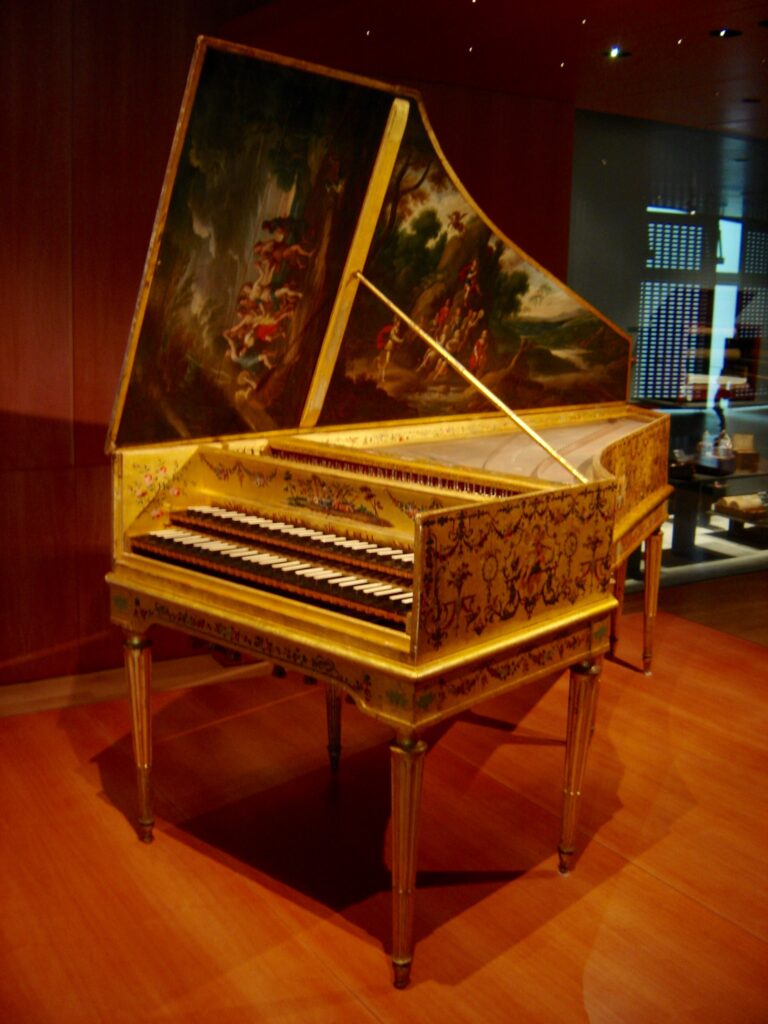
“I would say that the harpsichord was always a very special instrument, prized by musicians and connaisseurs in the 16th-18th centuries and enjoyed by music lovers today. It’s technologically advanced, musically expressive, and served as inspiration for such composers as Couperin and Bach, who wrote magnificent music for it.”

What is your favorite thing about the harpsichord?
“The crystalline precision of the sound combined with its ability to weave musical textures in a particularly effective way.”

What is your favorite piece to play on the harpsichord?
“Bach’s Goldberg Variations, hands down.”

What is a piece that you would recommend someone unfamiliar with the harpsichord listen to?
“Couperin “Les Baricades Misterieuses” or anything from Bach’s Well-Tempered Clavier.”

In your opinion, what makes the harpsichord particularly special?
“Each instrument has its own distinctive personality coming from its country of origin and era of construction – 17thC or 18thC , French or German or English or Italian – and that the music comes alive when one plays the right music on the right instrument.”

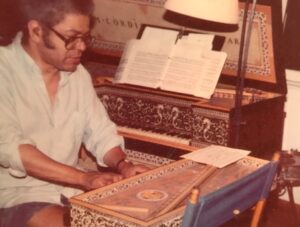
Jim & his virginal:

The Virginal with James Nicolson

Remembered lovingly by CSEM as long-time Artistic Director

The Double Virginal, written by Herb Snitzer for James Nicolson:

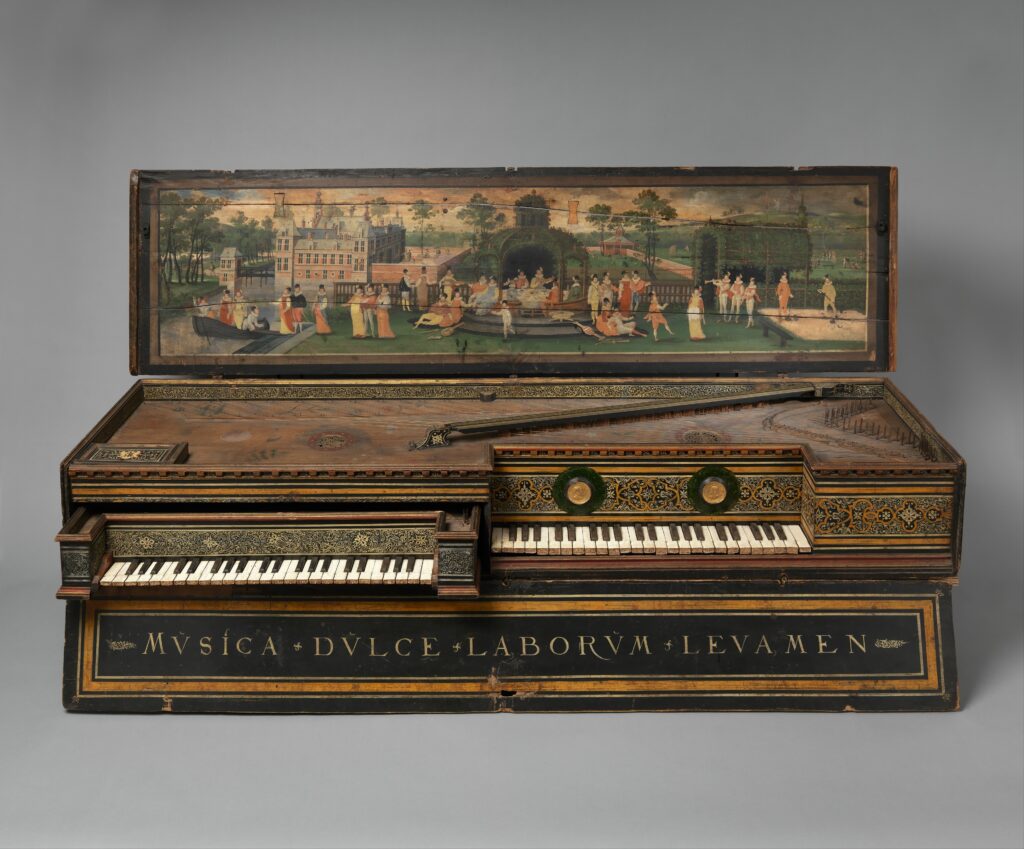
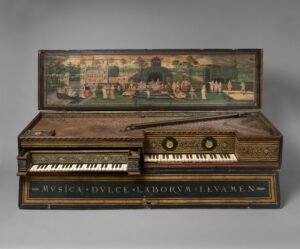
During the time known to us as the High Renaissance, a number of musical instruments, especially keyboard instruments, developed into spectacularly successful forms for enjoyment within a flourishing musical culture. A particularly beloved example was the Flemish virginal, or “muselaar,” a true member of the harpsichord family, quite rare today, but found everywhere in Europe and used up until about 1650. These rectangular instruments, built primarily in Antwerp, richly decorated and endowed with enormous resonance, were a treat for the eye as well as the ear. The virginal, with its own characteristic sound, and with its tuning system employing pure thirds, producing sweet resonances and biting dissonances, is ideal for the music of the day from such composers as Cabezón, Frescobaldi, Byrd, Sweelinck, and others.

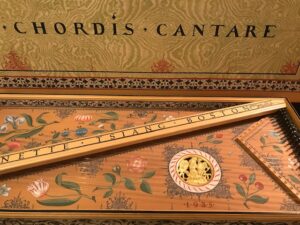
The instrument played by James Nicolson, based upon an original of 1620, was built by Lynette Tsiang of Somerville, Massachusetts. It is, correctly speaking, called a “double virginal,” because it contains in a hidden compartment a smaller, octave-higher virginal, which can be played alone or coupled together with the larger instrument to provide a greater range of sonorities for the listener. Of these “Mother and Child” instruments, a Flemish invention of the late 16th century, fourteen known examples survive, and James Nicolson [was] probably the only harpsichordist in modern times who regularly concertized with such an instrument.